
Your needs, this model
Does it fit your priorities?
What does the MSF100 actually locate?
Klein describes an N52 rare-earth magnet for metal studs and fasteners within wood studs behind walls. That makes the response a ferrous-target cue, not a scan of wood density or a direct report of the whole stud's center.
Explore this need in the finder →How should I read the one-inch depth claim?
The datasheet lists scan depth up to one inch. It is an upper comparison limit for magnetic targets, not a promise through every drywall finish; a selected 1.1-inch minimum is beyond the published figure.
Explore this need in the finder →Does its notch or bubble vial make it an electronic center finder?
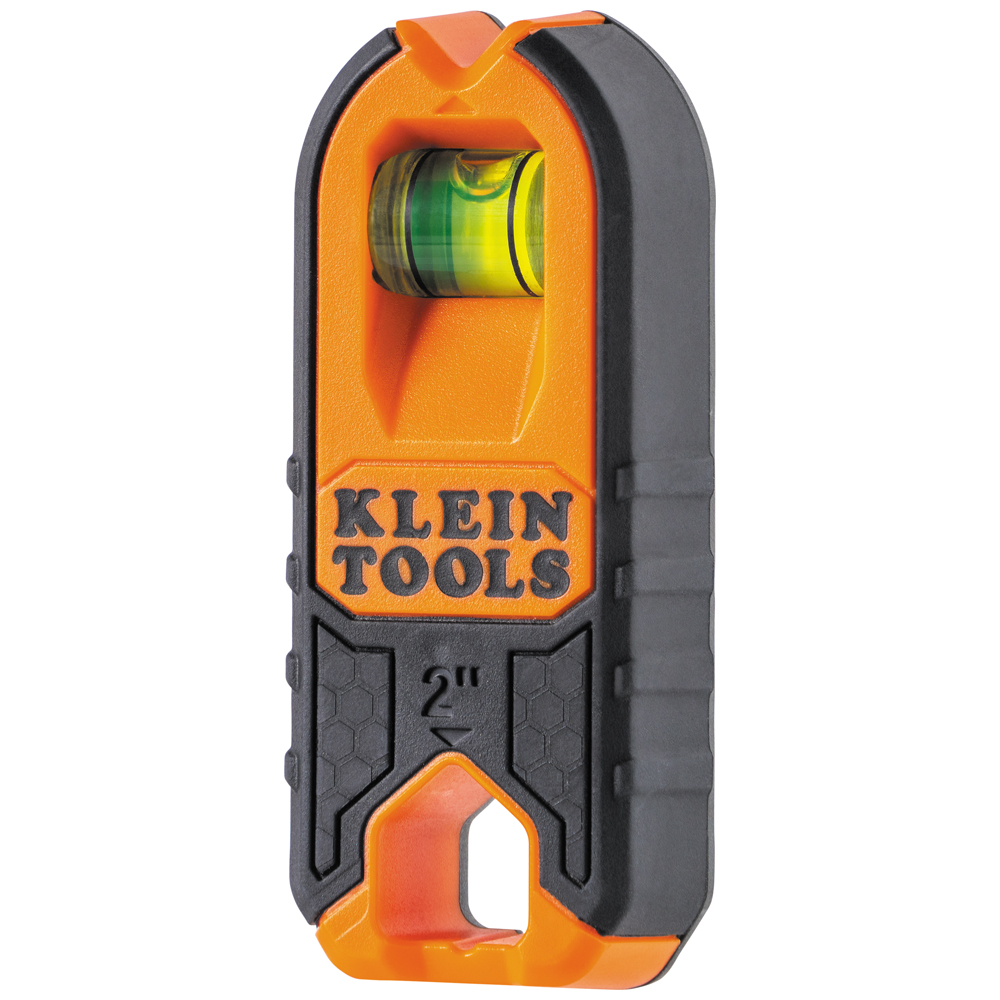
No. The top notch and bottom opening help place a mark, and the bubble vial helps align it. The manufacturer lists no electronic center/edge display, voltage detection or live-wire meter.
Explore this need in the finder →The Klein Tools MSF100 is a single, manually operated magnetic finder, not a small electronic detector. Its U.S. product page and datasheet describe a rare-earth magnet for finding metal studs and fasteners behind walls, with a stated scan depth up to one inch. That difference in sensing method should drive the decision: the magnet responds to ferrous metal, while an electronic model looks for changes in wall density and displays a different kind of signal.
It follows a metal target, not the outline of a wood stud
Klein identifies an N52 rare-earth magnet, and its application description names metal studs and fasteners within wood studs. A magnetic attachment can therefore be useful when the hidden wall construction includes a ferrous target at a location that matters. It does not reveal the full width of a wood stud, and the source page does not promise that every stud contains a reachable screw or nail in the spot being scanned. Treat an individual attraction as a point to investigate rather than a complete map of the member.
The MSF100 has a center top notch, a lower opening and a bubble vial. Those are practical marking and alignment features: the notch and opening give a place to transfer a mark, and the vial can help keep a separate line level. They are not electronic edge indicators or a digital center display. That distinction matters for a mount that depends on knowing both stud boundaries or a repeatable centerline. An electronic option such as Klein's ESF050 documents separate edge and center cues, while the MSF100's signal is magnetic attachment.
Read “up to one inch” as a limit, not a wall guarantee
The exact MSF100 page and its model-specific datasheet publish a scan depth of up to one inch. The figure is useful for a rough capability screen, but the source does not describe a universal performance rate across finishes, target sizes or distances. A thick finish, missing fastener or target located away from the magnet's path may change what happens. This research did not measure the finder or test it on a wall, so the maker's number is the only depth statement used here.
That puts the MSF100 in a different comparison from an electronic stud-depth claim. It does not mean that it can find a wood stud edge one inch behind any surface. The reviewed single-unit Zircon StudScout is another fastener-oriented magnet but has no manufacturer-stated numeric depth in the sources reviewed for this site. A numeric figure helps set expectations, yet it cannot turn a ferrous point into proof of a stud.
Surface and electrical boundaries are easy to overread
Klein describes locating metal targets behind walls and says the felt pads safeguard drywall and plaster finishes. That is not the same as a model-specific promise to scan through lath and plaster. The available product page does not provide a separate use manual or a supported-depth plan for plaster, tile, exterior walls or metal mesh. Drywall is the ordinary fit considered here, but the source does not guarantee a result on every drywall construction.
The same caution applies to utilities. The MSF100 specifications say it does not detect voltage or live wires. A magnetic response cannot say whether a hidden point is a stud fastener, another metal object or part of a service, and the tool is not a clearance instrument. Keep wiring, plumbing and gas safety checks separate; turn off utilities before penetrating a wall and use independent information when a mistaken hole could cause harm.
Klein also flags a strong magnetic field. The current product warnings should be checked before use, especially around devices, cards or storage media that may be affected. The product information consulted here does not state a numeric separation distance, so none is invented.
Choose the one-unit package only when one point is enough
The MSF100 is the single finder. Klein lists the separate MSF1002 two-pack and says its two tools can be placed as reference points while work is underway. The individual magnetic method and one-inch maximum are not upgraded by buying two. The package difference is practical only if two matching units are useful at once; it is not extra depth, an electronic display or a second sensing mode.
Before ordering, verify the exact product number and package count. The MSF100 is SKU MSF100 with UPC 092644694790; the two-piece MSF1002 has its own SKU and UPC. Retail listings can mix package names, so confirm the label and contents rather than inferring them from a photo. There is no seller-specific bundle claim here.
Where this magnetic format makes sense
The MSF100 is a candidate when a compact magnet, a point-marking opening and a small bubble vial fit a modest drywall layout task. It avoids the interpretation questions of a multi-mode electronic display, but only by answering a narrower question: is there a useful ferrous target here? Look at an electronic finder if you need defined edges, center indications, a different depth range or a dedicated live-wire cue, and read that model's manual for its own restrictions. No stud finder establishes the identity of every hidden object or makes a wall safe to drill.
This assessment is based on Klein's current U.S. product page, official datasheet, catalogue and exact product image. It does not claim hands-on use, ownership, laboratory testing, measured performance, price, stock or customer experience.
Key specifications
Key details at a glance
| Maximum stated stud depth | 1 in |
|---|---|
| Depth qualification | Klein lists scan depth up to 1 inch for the magnetic tool. This is the manufacturer's maximum scan-depth claim for metal studs and fasteners, not a guaranteed response or an electronic stud-edge depth. |
| Documented scan modes | ['Magnetic attraction to metal studs and fasteners'] |
| Center and edge indication | No |
| Live-wire meter | No |
| Built-in bubble level | Yes |
Use the exact model’s instructions for operating limits, supplied equipment and version differences.
Sources for this review
Sources for this assessment

Check this model against your wall
Use the finder to compare documented surface limits, center/edge indications and other requirements. A match is not a safety certification.