
Your needs, this model
Does it fit your priorities?
What is different about the MSF1002 from the single MSF100?
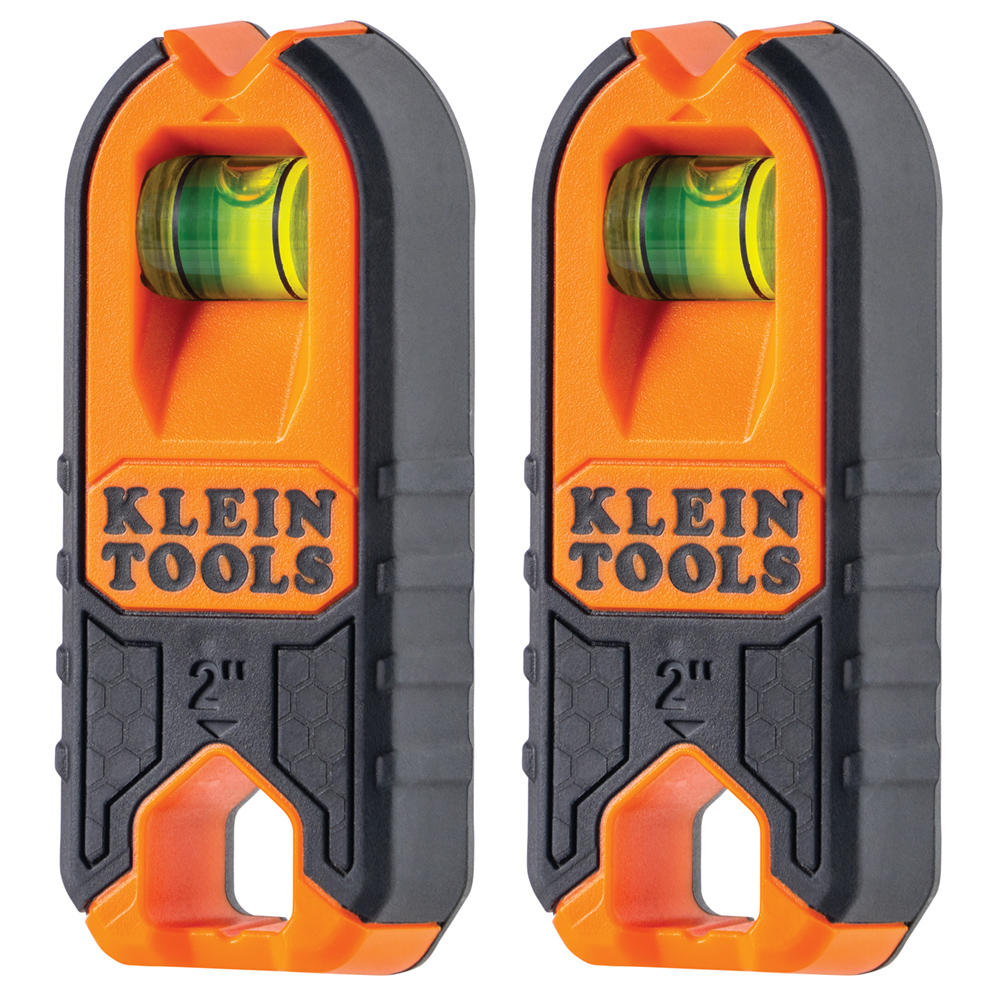
The MSF1002 package contains two MSF100 magnetic finders, and Klein describes using both as reference points while working. The documented magnet, one-inch maximum scan depth, notch and bubble vial are the same per unit; the pack does not add depth or a new sensing mode.
Explore this need in the finder →Can the pair read the center and edges electronically?
No electronic indicator is listed. Each unit uses magnetic attraction plus a marking notch and bubble vial. Those features can help locate a ferrous point and align a mark, but they do not identify a stud's electronic center or paired edges.
Explore this need in the finder →Does the two-pack provide a live-wire check?
No. The exact MSF1002 specifications say it does not detect voltage or live wires. Two magnetic reference tools do not replace an independent check of wiring or other utilities before penetrating a wall.
Explore this need in the finder →The Klein Tools MSF1002 is not a new sensing system layered on top of the MSF100. It is the separately listed two-pack: two matching magnetic finders, each using a rare-earth magnet, marking features and bubble vial. Klein's exact U.S. page says the pair can be placed as reference points while working. That extra unit can support a two-place layout, but it does not double the scan depth or make either tool read the center of a wood stud electronically.
What the second unit changes—and what it does not
The MSF1002's product page and datasheet specify two finders in the box. Each unit has the same basic N52 magnet, top center notch, lower marking opening and bubble vial described for the single MSF100. Klein's package-specific point is that multiple finders can be placed on the wall as reference points during work. That makes the two-pack distinct for a buyer who wants separate, simultaneous reference locations rather than just one portable tool.
There is no evidence that the two magnets combine into a stronger scanner, work as a paired electronic sensor or create one shared reading. Each one remains a manual magnet, and each has the maker's same “up to 1 inch” scan-depth claim. The extra tool can help hold another point on the wall while marking a layout; it cannot tell whether a fastener line is a stud or certify that two candidate points align with structural framing.
The magnetic target sets a narrow task
Klein describes detecting metal studs and fasteners within wood studs behind walls. The magnet therefore responds to a ferrous object it can reach, not to the density change of a whole wooden stud. If the target pattern is absent or irregular, the package provides no electronic fallback mode. A single magnetic response should be treated as a candidate point; compare other fasteners and wall information before relying on a line for an installation.
The notch and bubble vial are useful aids, but do not blur their roles. The notch gives a marking reference and the vial helps align a separate line. Neither is an edge signal or electronic center cue. Buyers who need a displayed stud boundary or center should compare an electronic model such as the Klein ESF100, whose seven-light layout documents center and edge information, or review other finder types against their own manuals.
One-inch scan depth and wall materials
The exact MSF1002 page and datasheet list a scan depth up to one inch. This is a manufacturer maximum for the magnetic target, not an assured working distance through every wall covering. It should not be read as a deep electronic stud scan, and placing a second tool elsewhere does not extend the first one's range. This comparison contains no independent measurement or hands-on test.
The product page describes targets behind walls and says felt pads safeguard drywall and plaster. A wall-protection statement does not establish detection through lath-and-plaster construction. The exact MSF1002 sources do not describe a dedicated plaster scan procedure, tile or exterior capability, or an ability to handle metal mesh. Dry interior drywall is a reasonable common scenario, but an individual wall can still lack the needed ferrous fastener or have an unsuitable construction.
Do not use it for electrical clearance
The manufacturer specifications say the MSF1002 detects neither voltage nor live wires. A rare-earth magnet is not a wire detector, and the two-piece package does not change that limitation. Keep safety decisions about wiring, plumbing and gas independent from a stud-finding response; turn off utilities before drilling or cutting and confirm the intended path with suitable methods.
Klein warns of a strong magnet field. Follow the current model warnings and consider any nearby devices or media that might be sensitive to magnets. The captured product information does not give a numerical safety distance, so this assessment does not supply one. The page's downloads expose a product datasheet and images but no separate operating manual link; the documented feature list, rather than an invented detailed procedure, is the basis for the assessment.
Package checks before buying
Look for the exact model MSF1002 and UPC 092644694806, then confirm the offer says two finders. The single MSF100 has a different product number and UPC; it may suit a one-point task but cannot provide the same two-unit package arrangement. The official image here shows two identical tools, not extra electronic features or an unverified case. Seller-specific additions should be checked on the exact offer.
Choose the MSF1002 when two independent magnetic reference points and two bubble vials are useful for the job. Choose a single magnet when the second unit would sit unused, or an electronic scanner when the essential need is a defined edge, center, different documented depth or live-wire indication. The second finder is a quantity and workflow advantage—not proof of better detection.
This research-based assessment uses Klein's current U.S. catalogue, exact MSF1002 page, official datasheets and the model-specific two-tool image. It makes no claim of hands-on use, ownership, measured performance, price, stock or customer experience.
Key specifications
Key details at a glance
| Maximum stated stud depth | 1 in |
|---|---|
| Depth qualification | Klein lists scan depth up to 1 inch per magnetic finder. The second unit adds a simultaneous reference point, not greater per-unit scan depth or electronic edge detection. |
| Documented scan modes | ['Magnetic attraction to metal studs and fasteners'] |
| Center and edge indication | No |
| Live-wire meter | No |
| Built-in bubble level | Yes |
Use the exact model’s instructions for operating limits, supplied equipment and version differences.
Sources for this review
Sources for this assessment

Check this model against your wall
Use the finder to compare documented surface limits, center/edge indications and other requirements. A match is not a safety certification.