
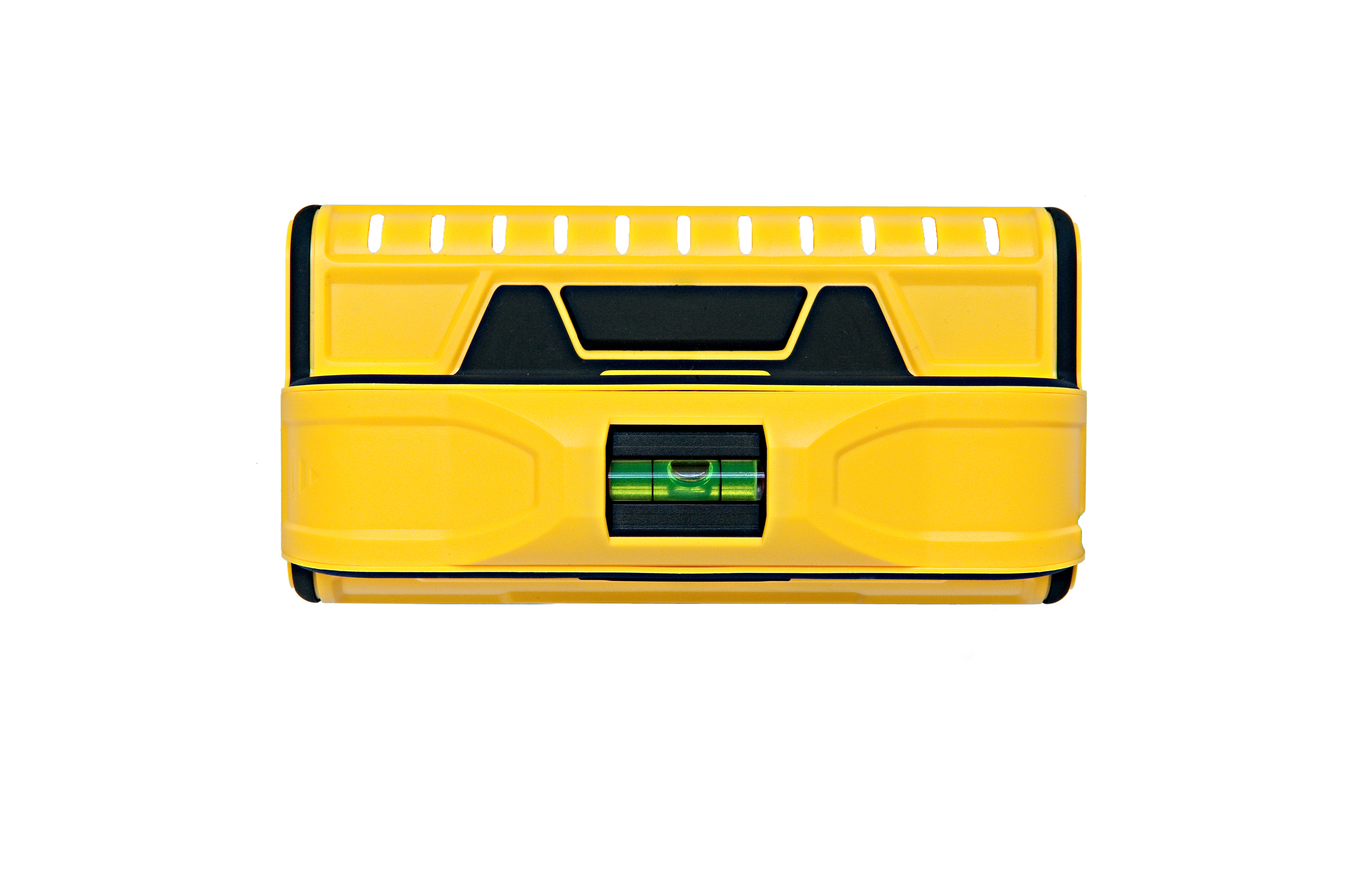
Your needs, this model
Does it fit your priorities?
Does the X1100's bubble level make its stud signal more reliable?
No. Franklin lists a built-in bubble level on the exact X1100 page, which can help keep a mark or another tool level. The level does not validate a density-change response or identify a hidden object. Confirm both edges, repeat the scan from another direction, and check utilities separately before drilling.
Explore this need in the finder →Can the X1100's 1.6-inch figure be used for a lath-and-plaster wall?
The X1100 page states a 1.6-inch maximum, but the reviewed shared manual's conditional plaster paragraph names T11, T13, M132, 710 and 710+, not X1100. I would not infer plaster compatibility from a family number or the same depth figure; treat that use as undocumented for this exact model and ask the maker about the wall construction.
Explore this need in the finder →Does the X1100 include a dedicated live-wire meter?
The exact X1100 feature list and shared operating sheet reviewed here do not establish a dedicated meter for this model. The finder can still respond to density changes around wires, but that is not the same as a documented wire meter, and a negative reading cannot prove a wall is safe. If a meter is essential, compare models whose exact instructions name one.
Explore this need in the finder →The X1100 is best understood as an 11-light wall scanner with two practical extras: Franklin lists a built-in bubble level and a pencil caddy on the exact model page. The company states a 1.6-inch maximum detection depth. Those are useful facts for comparing a layout tool, but they are not independent performance tests, and a printed maximum cannot promise what will happen through a particular wall. This is a source-based desk assessment; I have not handled or tested the instrument.
What the X1100 identifies—and what the lights do not
The manufacturer lists 11 sensors and 11 LEDs. The current shared operating sheet says the ProSensor family tracks stud edges and center at the same time. That pattern may make it easier to mark a span than a single beep, but the instructions describe the instrument as responding to density changes. They warn that pipes, wiring, texture, patches or other material differences can trigger a response, and that hidden objects can also be missed. A broad or repeated pattern is a clue to inspect, not a label saying “wood.”
For a careful first pass, start with a clean, dry wall and a clean sensing face. The manual recommends firm contact with the flattest portion of the surface, holding the tool by its handle, and keeping fingers away from the sensor area. Press and hold the button; the sheet says calibration is not required and that the scan can begin on or off the wall. Mark both boundaries of a repeatable pattern, then scan again—vertically if needed—to see whether the response stays coherent. Avoid turning a one-pass mark into a drilling decision.
The 1.6-inch limit is not a universal wall rating
Franklin’s X1100 page gives 1.6 inches as the maximum. That number is useful as a screening boundary: a person who needs a model with a larger published figure should compare a model that actually states one. It does not mean every stud at that depth will be detected, or that every wall finish is compatible. Moisture, uneven texture, sensor contact and construction all affect the meaning of a signal. The family manual advises against use on tile, flooring, roofing and exterior materials because their densities vary; foil-backed insulation may produce inconsistent readings and metallic wallpaper may block the signal.
One tempting shortcut is to borrow a sibling model’s plaster claim because the X1100 shares a family manual and a similar maximum. The current sheet specifically names T11, T13, M132, 710 and 710+ when discussing lath-and-plaster limits, but it does not include X1100 in that sentence. I therefore do not count the X1100 as a documented plaster match. That is a boundary in the reviewed evidence, not proof that the tool can never show a signal through any plaster wall. Ask Franklin about the exact backing and construction rather than substituting a nearby model’s instructions.
The level is for marking, not sensing
The bubble level can help align a mark or keep a reference line straight. The pencil caddy keeps a writing tool close at hand. Neither feature changes the detector’s maximum depth or verifies that a response is a stud. The reviewed product page does not establish whether a pencil, battery or case is supplied in a particular seller’s box, so check the exact offer before buying. The page also includes a ruler feature image; that supports the presence of a scale, not a tested measurement claim.
Compare the exact variants
The closest paper comparison is the T11: both pages list 11 sensors, 11 LEDs, a 1.6-inch maximum and a pencil caddy. The X1100 page adds the bubble level; the T11 page uses an image labelled “no bubble.” More important than that convenience difference, the current manual names T11 in its conditional plaster guidance and omits X1100. The ProSensor 710+ is another distinct configuration, with 13 sensors and 13 LEDs plus a level and ruler, but it still states 1.6 inches. More lights or a level should not be mistaken for a deeper reach. See the separate T11 and 710+ assessments for those differences.
What it does not establish
The X1100 product page and the shared instructions reviewed here do not identify a dedicated live-wire meter or say that its center LED turns green. Those are unknown for this exact model, not capabilities to assume from an “X” name or from another Franklin finder. A stud-finder signal is also not a wire map: a wire may be missed, while wiring can itself affect a density display. Turn off services before penetrating a wall and use an appropriate independent check where hidden utilities matter.
Bottom line: the X1100 is a reasonable documentary candidate for dry interior drywall when its center-and-edge pattern, bubble level and pencil caddy suit the marking task and a 1.6-inch stated maximum is enough for comparison. Its source record leaves plaster compatibility, a dedicated live-wire meter, a green center cue, SKU and seller-package contents unconfirmed. Read the official X1100 page and its current shared operating instructions before use.
Key specifications
Key details at a glance
| Sensing points | 11 |
|---|---|
| Indicator lights | 11 |
| Maximum stated stud depth | 1.6 in |
| Depth qualification | The exact X1100 product page states 1.6 inches. This is a maker-stated maximum, not a guarantee through a particular wall; the current shared manual's lath-and-plaster limits name other family models, not X1100. |
| Center and edge indication | Yes |
| Built-in bubble level | Yes |
| Battery requirement | 2 AA; the shared manual specifies 1.5-volt alkaline cells and says not to mix old/new or battery types |
| Built-in ruler | Yes |
Use the exact model’s instructions for operating limits, supplied equipment and version differences.
Sources for this review
Sources for this assessment
Check this model against your wall
Use the finder to compare documented surface limits, center/edge indications and other requirements. A match is not a safety certification.