
Your needs, this model
Does it fit your priorities?
What does the T11 manual say about lath and plaster?
The current shared instructions say the T11 may see through most lath-and-plaster walls up to 1.6 inches. The maker also warns that uneven plaster thickness or construction variation can exceed that limit and that metal mesh may prevent detection. Check the actual assembly and do not treat a maximum-depth statement as a guaranteed scan result.
Explore this need in the finder →How is the T11 different from the X1100?
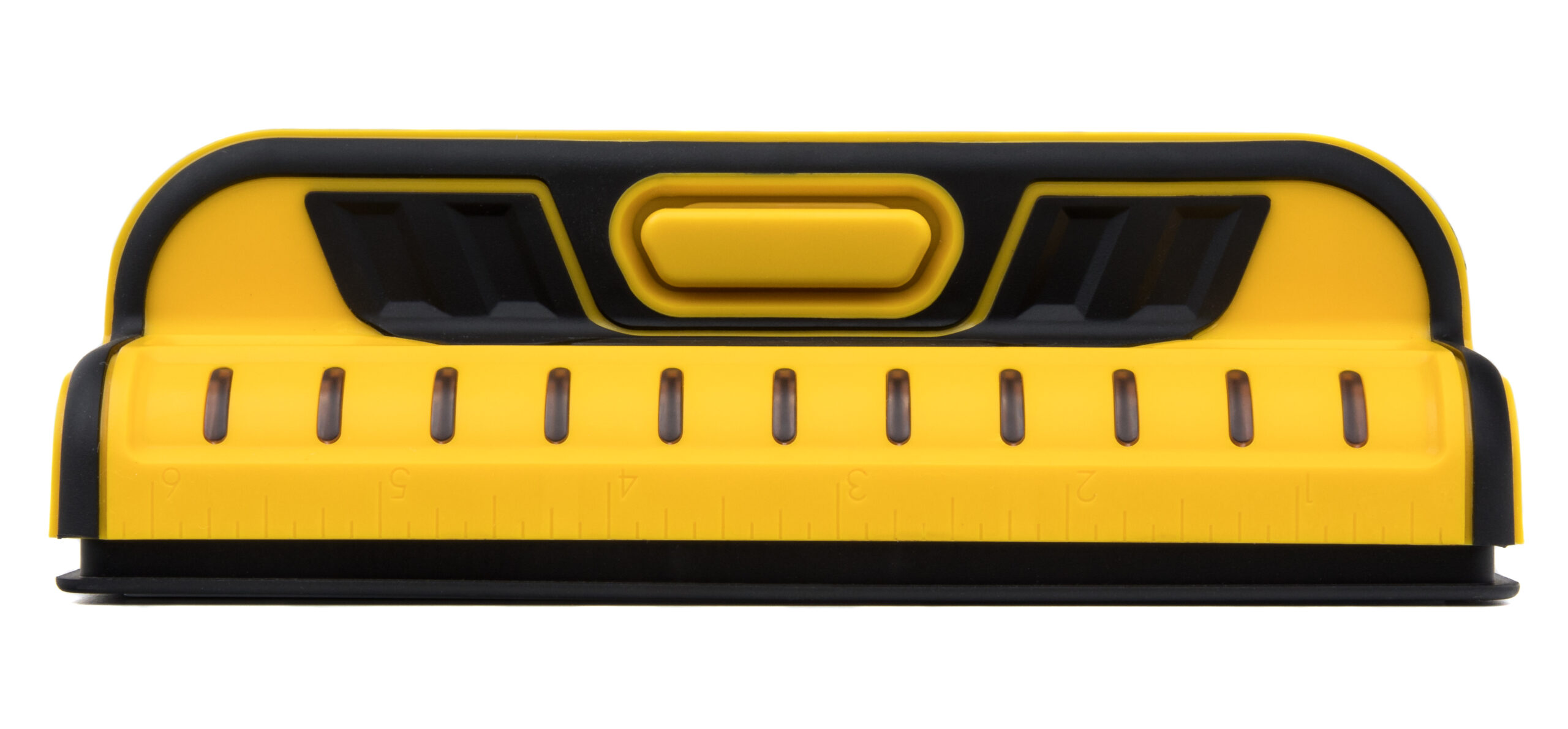
Both exact model pages list 11 sensors, 11 LEDs, a 1.6-inch maximum and a pencil caddy. The X1100 page additionally lists a built-in bubble level; the T11's model image is labeled as the no-bubble version and its feature list does not list a level. Their surface documentation also differs: the current manual explicitly names T11 for conditional lath-and-plaster use but does not extend that clause to X1100.
Explore this need in the finder →Can I require the T11 to warn about live wires?
The exact T11 product page and shared family manual reviewed here do not identify a dedicated live-wire meter, so it should not be treated as a match when that added meter is essential. A density-change signal may still be caused by wiring, but it is not a reliable wire map; shut utilities off and use appropriate independent checks before drilling.
Explore this need in the finder →The ProSensor T11 is an 11-sensor, 11-LED electronic stud finder whose most consequential distinction in this library is not its light count: Franklin’s current shared instructions specifically name the T11 for conditional lath-and-plaster scanning up to 1.6 inches. The exact product page also lists a pencil caddy and says the instrument shows the width of multiple objects. This is documentary research rather than a hands-on review; no detection trials or accuracy measurements were performed.
Start with a pattern, not a single mark
The current operating sheet describes a no-calibration start. Hold the T11 by its handle, keep fingers clear of the sensing face and press and hold the button while scanning. The LEDs track center and edges together, so a likely framing member can be marked from both sides. That is more informative than treating the first bright light as a center point. Make a second pass in the same area, then scan vertically if a response is uneven. The manual says a stable response tends to remain while an irregularity may appear only sporadically, but this is a procedure for interpreting a signal—not a promise that the device identifies the object.
Electronic finders respond to differences in density. A seam, paint repair, pipe, wire or textured patch may produce a pattern, and the tool can miss objects that are present. Start on a clean, dry surface with the sensing area at a similar temperature to the room. The instructions recommend firm contact on the flattest part of the wall. Nearby trim, switches or outlets are reasons to slow down and verify, not reasons to trust a stronger display.
The plaster clause is specific and qualified
Franklin states a 1.6-inch T11 maximum and says the T11 may see through most lath-and-plaster walls up to that limit. The same manual cautions that uneven plaster thickness or other construction variation can exceed the limit and that metal mesh may prevent detection. “Most” is not “all,” and the stated maximum is not a guaranteed reading through a wall of that thickness. Check the actual finish and backing where possible, and do not let the single depth number stand in for a surface-specific assessment.
The company does not recommend this ProSensor family for tile, flooring, roofing or exterior work because those materials vary in thickness and density. Foil-backed insulation can make readings inconsistent, and metallic wallpaper may block the signal. The T11’s plaster guidance should not be stretched into a general-purpose masonry or tile rating. If your wall is unusual or the work is consequential, seek a tool whose exact instructions cover the assembly or get a qualified assessment.
Do not confuse it with the X1100
The T11 and X1100 are close enough in headline numbers to invite an accidental merge: both pages list 11 sensors, 11 LEDs, a 1.6-inch maximum and a pencil caddy. Yet the individual X1100 page lists a built-in bubble level, while the T11 product image is labeled as the no-bubble version. More importantly, the manual names T11 in the lath-and-plaster sentence but omits X1100. Same family and same printed maximum do not establish the same operating plan. Compare the X1100 assessment if a level is useful, and check its separate surface evidence.
The 710+ is different again: it has 13 sensors and 13 LEDs, a level and a ruler, but its manual still gives a 1.6-inch plaster limit. T11’s caddy is a storage convenience, not an accuracy feature. The exact page does not establish whether any seller includes a pencil, batteries or case. Verify the retail model and package instead of assuming the accessories shown on marketing pages ship in the box.
Warning features and limits
The T11’s exact page and current family manual reviewed here do not establish a dedicated live-wire meter or identify its center LED as green. Those capabilities are unknown for this model, not things to infer from other Franklin products. Nearby wires can still produce density responses, which are not a reliable wire map. A live-wire warning on another tool is not a safety clearance either. Shut utilities off before penetrating a surface and use a separate appropriate method to check for services.
The required batteries are two AA cells; the manual specifies alkaline batteries and warns against mixing old and new cells or battery types. That requirement does not establish seller package inclusion. The page’s 1.6-inch figure and “width of multiple objects” description also are not independent measurements. Treat them as manufacturer specifications, read the instructions for the exact model, and confirm a candidate at the height where a fastener will go.
Bottom line: the T11 makes the strongest evidence-based case when conditional lath-and-plaster guidance, center-and-edge indication and a handy caddy matter more than a higher advertised depth. Its 1.6-inch maximum is not a wall guarantee, and metal mesh or variable plaster can defeat the scan. Read the official T11 page and current family instructions before operating it.
Key specifications
Key details at a glance
| Sensing points | 11 |
|---|---|
| Indicator lights | 11 |
| Maximum stated stud depth | 1.6 in |
| Depth qualification | The exact T11 page states 1.6 inches. The current shared manual separately says T11 may see through most lath-and-plaster walls up to 1.6 inches, with thickness and metal-mesh caveats; this is not a guarantee for an individual wall. |
| Center and edge indication | Yes |
| Battery requirement | 2 AA; the shared manual specifies 1.5-volt alkaline cells and says not to mix old/new or battery types |
| Built-in ruler | Yes |
Use the exact model’s instructions for operating limits, supplied equipment and version differences.
Sources for this review
Sources for this assessment
Check this model against your wall
Use the finder to compare documented surface limits, center/edge indications and other requirements. A match is not a safety certification.