
Your needs, this model
Does it fit your priorities?
What wall surface does the earlier StudMark+ support?
Calculated Industries' launch release describes the magnetic finder in sheetrock/drywall use. This assessment keeps only drywall as a positive plan; plaster, tile, exterior and metal-mesh performance are not established for this exact model.
Explore this need in the finder →Does StudMark+ report both stud center and edges?
No separate electronic edge or center indication is documented. The manufacturer describes magnets that catch likely fasteners, while the bubble vial is a leveling aid; neither establishes the full stud boundary.
Explore this need in the finder →What numeric depth can the StudMark+ meet?
The exact manufacturer material reviewed states no numeric stud-detection depth. Leave the value unknown; the model cannot satisfy even the finder’s lowest 0.7-inch minimum by inference.
Explore this need in the finder →Does this magnetic model provide a live-wire warning?
No dedicated live-wire or AC warning meter is documented for the StudMark+. A magnetic fastener response is not a wire check or a safe-to-drill signal.
Explore this need in the finder →This is a source-based assessment of an earlier model, not a hands-on test. The manufacturer’s current legacy route redirects to the separate StudMark 7310 page, so verify the exact suffix and package on any offer.
What the StudMark+ adds
StudMark+ sits in the simple magnetic-fastener part of the wall-finder category. Calculated Industries’ 2018 launch release describes a small handheld finder with two rare-earth magnets, two removable markers and a built-in bubble vial. Its distinguishing extra over the similarly named StudMark 7310 is that vial: the maker presents it as a way to help level an item after finding a likely fastening point. The release does not claim an electronic display, a scanned stud-width readout or an alarm.
A contemporaneous Woodworker’s Journal report identifies the product as StudMark+ model 7350 and links to the maker’s then-current product route. That old route now redirects to the current 7310 page. Because the present manufacturer page does not verify 7350 as a current SKU or package code, this assessment uses StudMark+ as the product identity and leaves the SKU unset. The distinction matters when inspecting older marketplace offers: a familiar brand name or a bubble-level image alone does not establish which exact model is in the box.
A fastener clue, not a stud-width scan
The magnetic approach answers a narrower question than an electronic density scanner. The manufacturer describes the magnets attracting to the nails or screws that fasten sheetrock to framing. A catch can mark a candidate point, but it is not the near and far edge of the stud, a measurement of the wood itself, or proof that every fastener in a line belongs to one sound stud. A single attractive point should not be treated as a complete map for a heavy installation.
The included markers let a user keep multiple candidate points visible without immediately drawing on the wall; the 2018 release says both versions included two. The bubble vial is a separate layout aid, not another detector. It may help align a line or object after a location is chosen, but no source reviewed here establishes that the vial rotates, reads vertically and horizontally, or replaces a longer level. Check the actual tool and any included instructions rather than assuming those additional functions.
Surface and depth claims stay narrow
The maker’s launch material discusses sheetrock and drywall fasteners. That supports a drywall operating plan, not a general promise for plaster, tile, exterior cladding or metal mesh. The current 7310 page contains a plaster caution for that model, but this assessment does not silently transfer the warning or a positive claim to StudMark+. The exact StudMark+ materials reviewed do not describe a special procedure for lath-and-plaster walls.
No numeric stud-depth ceiling appears in the reviewed manufacturer release, video title, current marker-set information or redirected product page. The missing number is not zero and is not a reason to borrow the 7310’s specifications. It means this model cannot meet a stated minimum-depth filter in this library. The same restraint applies to a live-wire meter: the materials describe magnets and a level, but no AC warning sensor. It is not a substitute for an electrical detector or a safety check before drilling.
How it differs from the current 7310
The current StudMark 7310 is the related but separate model. Its present maker page assigns it model 7310, while the StudMark+ launch release describes the extra built-in bubble vial on the Plus. Both use magnets to find likely fasteners and both are described with two removable markers, but the features must not be collapsed into one product record. The manufacturer also lists a separate six-marker accessory, model 7356; that does not establish that six markers come with an older StudMark+ offer. Compare the current StudMark 7310 assessment and the manufacturer's 7356 marker-set page before treating similarly named components as one package.
What to verify before relying on an older offer
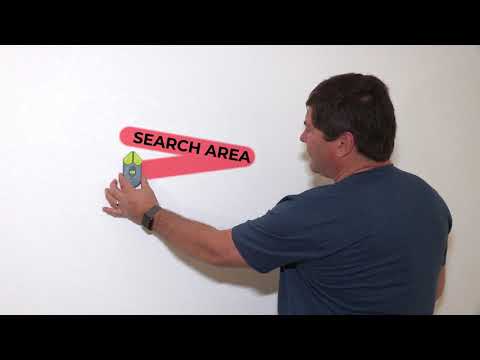
The available model-specific public material is thin compared with a current electronic finder manual. The 2018 manufacturer release supports the magnet count, two markers, no-battery operation and bubble vial; the official video is specifically titled for StudMark+ and shows it in a search demonstration. Neither source gives a numeric depth or a full package list, and the legacy manufacturer URL no longer serves a separate Plus product page. This is an explicit source limitation, not a claim that no instructions or surviving stock exist.
For an older item, check the name on the body or packaging, the presence and condition of both markers and the bubble vial, and whether the supplied instructions match StudMark+ rather than 7310. The trade-press model number 7350 is a useful cross-check, not a substitute for inspecting the actual edition. Ask whether the item is complete and whether the seller's return terms cover an incorrect model; no price or present availability is asserted here. For wall work, mark more than one plausible fastener point, confirm alignment and fastening conditions independently, and choose another tool if numerical reach, edge/center signals, difficult-surface guidance or live-wire detection is essential.
Key specifications
Key details at a glance
| Depth qualification | No numeric stud-detection depth appears in the reviewed manufacturer press release, official video/title, current accessory page or current redirected product route. Keep depth unknown; do not transfer a figure from StudMark 7310, a retailer, or another magnetic finder. |
|---|---|
| Center and edge indication | No |
| Built-in bubble level | Yes |
| Battery requirement | None required; magnetic operation |
Use the exact model’s instructions for operating limits, supplied equipment and version differences.
Sources for this review
Sources for this assessment
- Calculated Industries launch release for StudMark and StudMark+
- Woodworker's Journal contemporaneous report identifying the StudMark+ model number
- Calculated Industries official StudMark+ magnetic stud finder and level video
- Official video thumbnail showing the StudMark+ during a search demonstration
- Calculated Industries legacy StudMark+ product route; now redirects to the distinct StudMark 7310 page
- Calculated Industries StudMark Removable Marker Set model 7356; product page names StudMark+ as a compatible finder
- Calculated Industries current StudMark 7310 product page and U.S. Drywall Tools category

Check this model against your wall
Use the finder to compare documented surface limits, center/edge indications and other requirements. A match is not a safety certification.