
Your needs, this model
Does it fit your priorities?
Does the Spot show electronic stud edges or a center?
The official page describes a click/stick indication and a detachable marking line, not electronic edge or center mapping. The line helps preserve locations; it does not add a scan-depth or wiring meter.
Explore this need in the finder →Is a minimum detection depth published for the Spot?
No. Its larger-magnet description is qualitative and is not a numeric detection-depth specification.
Explore this need in the finder →Does the Spot document an AC/live-wire warning?
The reviewed exact product page lists a magnetic click/stick cue but does not establish a live-wire meter; treat wiring safety as a separate requirement.
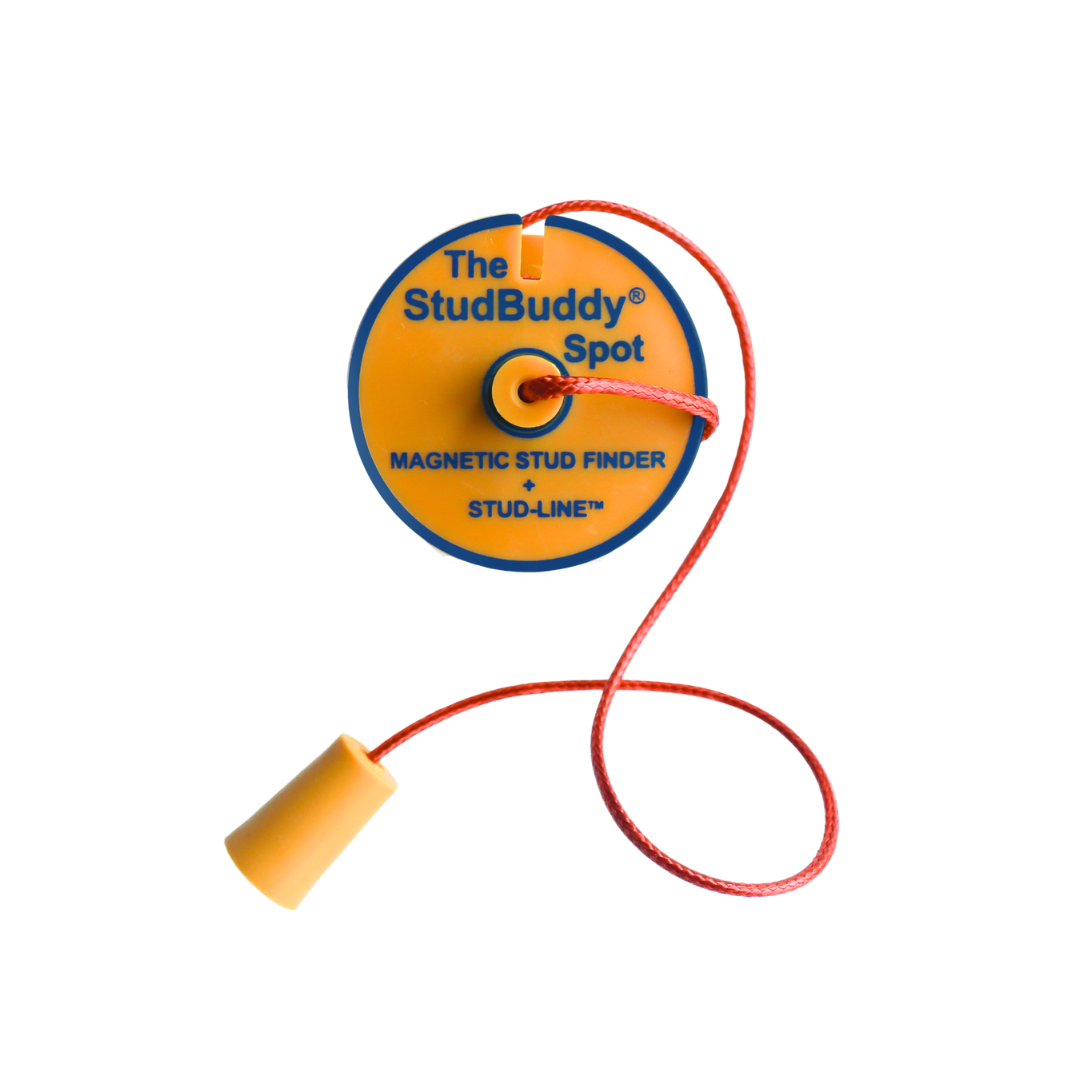
Explore this need in the finder →The StudBuddy Spot is a distinct magnetic finder in the maker’s current line, not an alternate name for the original or Pro. Its published differences are a larger permanent magnet, an audible click when a location is found, and a detachable Stud-Line accessory for marking multiple points. Those are potentially useful distinctions for a longer layout task, but the first-party page does not publish a numeric detection depth, an exact model code, or a detailed operating manual.
A click and a marking aid, not a depth specification
The maker presents Spot as a “slide, click, and stick” tool: its location cue is described as both audible and visible, and the detachable Stud-Line is intended to help mark several locations. This signal is different from the original’s visible magnetic stick and from the Pro’s separate level/ruler features. The page describes Spot as imported, whereas it describes the original and Pro as made in the USA; that is a real sourcing distinction to retain when comparing exact versions.
The manufacturer calls the magnet larger and more powerful than the original, but provides no measurement for its pull, no number for sensing depth and no comparative test result. Those qualitative statements cannot answer a shopping requirement such as “find a fastener at least a specified distance behind the finish.” The depth field therefore remains unknown, not a guessed value borrowed from another magnetic finder.
Use the drywall claim narrowly
The maker says Spot is for drywall applications. The reviewed exact page does not set out a separate lath-and-plaster, tile, exterior or metal-mesh procedure. If your wall is outside the ordinary drywall use the maker names, select a model whose own documentation covers that assembly; do not treat “larger magnet” as proof of success through a thicker or more complex surface.
The product copy implies a magnetic point-finding process, but does not explain exactly which concealed targets trigger the click or provide a complete scan path. That missing detail matters. A shopper can compare its documented click/stick cue and marker accessory with other tools, but should check the included instructions and avoid interpreting one response as a complete map of the stud or a safe drilling location. The manufacturer page does not document electronic stud edges or center, a live-wire meter, or a bubble level. Those features are not added to this assessment by assumption.
When the Stud-Line can be useful
For a single hanging point, a magnetic response with an audible cue may be enough to narrow where to investigate. For multiple shelves or fixtures, the detachable Stud-Line is the Spot’s clearest workflow differentiator: the maker says it can help mark multiple located points. That makes the Spot more relevant to repeated layout than a basic finder when keeping several candidate positions visible is the main task.
Still, a marking aid only preserves what the finder has already indicated. It does not tell you whether points lie on the same stud, show the stud’s boundaries, or validate the mounting pattern. Confirm the intended line with more than one plausible point and check the fastener spacing against the bracket or item being installed. If the exact retail offer does not include the detachable line shown in the current product description, pause and verify the package before relying on that workflow.
Compare it with the original and Pro
The original StudBuddy 000107 is the simpler documented choice for drywall fastener finding; its model-labelled package warns against lath-and-plaster use and no numeric depth is stated. The Pro adds horizontal/plumb levels, ruler markings, grip and felt pads to assist with layout after finding a likely point. Spot adds a click cue and detachable marking accessory instead. These should be compared by the actual task, not ranked by the word “professional” or by the maker’s unmeasured magnet-strength description.
If your requirements include a numeric minimum depth, electronic edges or center, a live-wire warning, or verified operation through a difficult surface, the published Spot information reviewed here does not establish those capabilities. Look for exact-model documentation that addresses the requirement, and keep electrical safety separate from any finder result.
Identity, image and source limits
The current first-party U.S. shop and exact Spot page establish a named, distinct product with a different capability set from the other two StudBuddy models. They do not establish a numeric model/SKU, UPC, a manual, or the exact dimensions and contents of a retail package. Direct access to the product page was challenged during retrieval, although its browser-accessible first-party text was individually inspected. An exact Spot photograph could not be verified from accessible source bytes during this review, so no original or Pro image is substituted.
That leaves a clear buying check: confirm that an offer is actually the Spot, includes the Stud-Line if that accessory matters, and comes with instructions for your wall. The research supports describing the stated click/stick cue and marking accessory; it does not support a depth promise, retailer availability, or a claim that the device was tested here. This is an evidence-based assessment, not a hands-on review.
Key specifications
Key details at a glance
| Depth qualification | The official page makes a qualitative larger-magnet claim but publishes no numerical detection depth. No depth is inferred from the original StudBuddy or a retailer page. |
|---|---|
| Documented scan modes | ['Manual magnetic search with audible click and visual sticking cue'] |
| Center and edge indication | No |
| Battery requirement | None; permanent-magnet operation |
Use the exact model’s instructions for operating limits, supplied equipment and version differences.
Sources for this review
Sources for this assessment
Check this model against your wall
Use the finder to compare documented surface limits, center/edge indications and other requirements. A match is not a safety certification.