
Your needs, this model
Does it fit your priorities?
Why does the T9 have both 1.5- and 1.6-inch figures?
The product page states 1.5 inches as the general detection-depth maximum. The shared T6/T62/T9 manual says the T9 can see up to 1.6 inches through most lath-and-plaster walls, while warning about mesh and thickness variation. Keep the higher number attached to that conditional surface statement.
Explore this need in the finder →Does the T9 show both the center and the stud edges?
The T9 product page calls it a center-and-edge finder, and the shared manual says the LEDs track center and edges simultaneously. The separate sentence about green center LEDs says only that certain models have one; it does not name the T9.
Explore this need in the finder →What comes with the T9 and what must be checked?
The exact product page lists a pencil caddy. The shared manual requires two AAA alkaline batteries, no calibration and a held-button scan, but the researched official page does not settle whether batteries or any seller-specific extras are included.
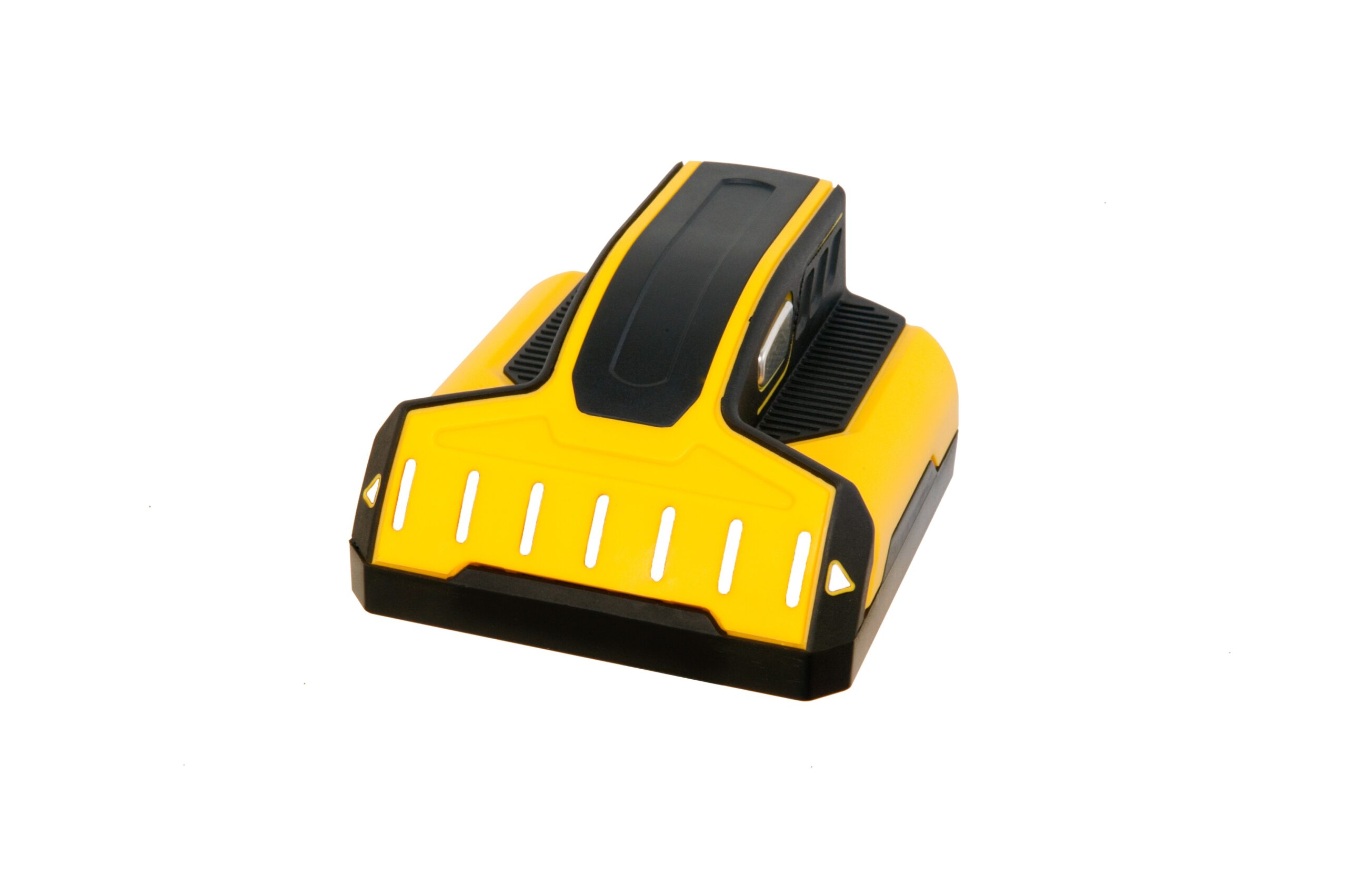
Explore this need in the finder →The Franklin Sensors ProSensor T9 is a separate eight-sensor, nine-light model whose page describes center-and-edge finding and a pencil caddy. Its product page gives a 1.5-inch detection-depth maximum. The shared T6/T62/T9 manual supports no-calibration startup, a button held for the full scan and simultaneous center-and-edge indications. It also gives the T9 a separate up-to-1.6-inch statement for most lath-and-plaster walls. Keeping those two depth claims attached to their stated conditions is central to a fair assessment. This is based on manufacturer sources, not physical testing.
A broader display than the T6, not a performance guarantee
The T9 page lists eight sensors and nine LEDs, compared with six of each on the T6. It names a center-and-edge finder and a pencil caddy. That is a useful distinction for a shopper comparing the visible arrangement and included built-in feature, but it does not establish greater accuracy. The manual says LEDs track center and edges simultaneously and respond to hidden density differences; pipes, wires or surface irregularities can produce a response too. A broad pattern should prompt a repeatable scan, not an assumption that the object is wood.The instructions mention that the center LED turns green on certain models without naming the T9. The exact T9 product page does not make a green-center claim. Its color status is therefore left unconfirmed, even though center indication itself is documented. This small distinction matters when comparing models for a color cue rather than just a center/edge pattern.
Two depth figures, two contexts
The T9's product page states 1.5 inches as the model's detection-depth headline. In a different sentence, the manual says the T9 can see through most lath-and-plaster walls up to 1.6 inches. That conditional plaster wording comes with cautions about irregular thickness, construction variations and metal mesh reinforcement. It should not be read as a general upgrade to the product page's limit on drywall or every other material. For dry interior drywall, this review uses the page's 1.5-inch figure; for a lath-and-plaster comparison, the higher number remains tied to the manual's qualifying language.Neither figure promises performance on a specific wall. Foil-backed insulation may cause inconsistent results; metallic wallpaper can block signals; and the manual does not recommend tile, flooring, roofing or exterior surfaces. Wet paint and wallpaper need to dry before scanning. If the wall assembly is uncertain, consider it an unanswered compatibility question instead of assuming a maximum-depth statement covers it.
Follow the held-button procedure
The manual says the T9 requires two AAA 1.5-volt alkaline batteries and should not be operated with rechargeable cells or mixed chemistries. Hold only the handle and keep a finger on the button throughout the scan. The instructions say calibration is not required, whether the unit is pressed on or off the wall at startup. If a response appears only briefly, continue scanning vertically as the manual recommends. A coherent pattern can help narrow a framing candidate, but the detector does not identify what triggered it.The product page lists a pencil caddy, which may be convenient when marking a candidate, but the researched sources do not establish a seller's package contents, standalone SKU or whether batteries are supplied. Check the exact T9 suffix, included items, seller and return terms before relying on a listing photo.
Compare it with the T6 and other routines
The T6 uses six sensors and six LEDs, identifies single-stud width and shares the same general 1.5-inch headline. The T9 adds a nine-light arrangement and the listed pencil caddy; its manual's conditional 1.6-inch plaster figure is a separate difference worth noticing, not a proof of superior scan performance. Both models document center and edge cues, while neither exact page/manual combination reviewed here documents a live-wire meter. The T9 is not a substitute for a meter if that warning feature is essential, and even a meter is never a safety clearance.Who should keep the T9 in view?
Consider the T9 when you want its documented center-and-edge layout, a pencil caddy and the option to evaluate a conditional lath-and-plaster wall. Keep the 1.5-inch general page claim separate from the 1.6-inch plaster note, and avoid tile, exterior or metal-mesh assumptions. If a signal is important, compare it with other information such as construction plans, visible service routes or repeated spacing patterns. Turn off relevant utilities before drilling and seek qualified help for critical or unclear work. The available evidence supports a particular set of features and limits; it does not support a claim that the T9 will find every stud or keep a wall safe.Key specifications
Key details at a glance
| Sensing points | 8 |
|---|---|
| Indicator lights | 9 |
| Maximum stated stud depth | 1.5 in |
| Depth qualification | The T9 product page states 1.5 inches; its T6/T62/T9 manual separately says the T9 can see up to 1.6 inches through most lath-and-plaster walls, subject to material limits. |
| Center and edge indication | Yes |
| Live-wire meter | No |
| Battery requirement | 2 AAA 1.5 V alkaline cells; do not use rechargeable cells or mix chemistries |
Use the exact model’s instructions for operating limits, supplied equipment and version differences.
Sources for this review
Sources for this assessment
Check this model against your wall
Use the finder to compare documented surface limits, center/edge indications and other requirements. A match is not a safety certification.