
Your needs, this model
Does it fit your priorities?
What does model 3040 actually detect?
C.H. Hanson describes rare-earth magnets that respond to screws or nails used to fasten drywall or paneling. That physical pull is a likely fastener point, not a scan of wood density or a complete stud-center reading.
Explore this need in the finder →Does its built-in vial mark stud edges or the center?
No. The rotating level is a layout aid for horizontal or vertical lines. The maker documents a magnetic pull at ferrous fasteners, not an electronic edge-and-center display.
Explore this need in the finder →What depth does the 3040 support?
The exact product page and official digital-assets record reviewed here provide no numeric stud-depth limit. We keep that field unknown rather than treating an outside listing or another model as evidence.
Explore this need in the finder →The 3040 is a manual magnetic finder, not an electronic density scanner. C.H. Hanson identifies the instrument as model 3040 and describes rare-earth magnets that respond to screws and nails holding drywall or paneling to framing. Its rotating level is a separate layout aid: the manufacturer says it can help mark horizontal or vertical guide lines after a likely attachment point has been found. The listed configuration is one finder, with no batteries required.
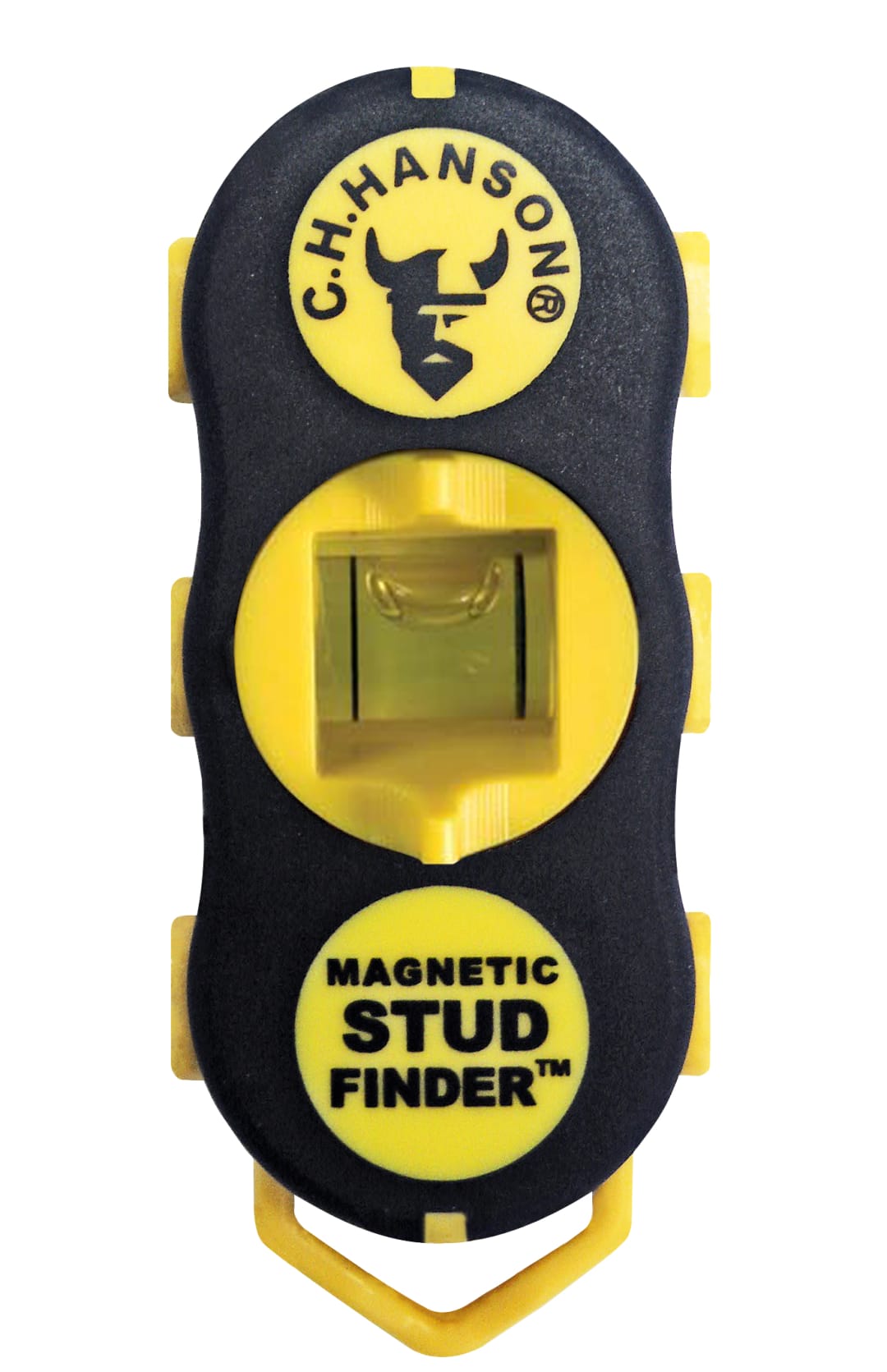
What the magnetic pull tells you
The useful distinction is between a fastener cue and a map of the stud. The magnet can reveal a ferrous screw or nail that may be part of a stud fastening pattern; it does not sense wood density, report a numeric depth, or display the full boundaries of a stud. The product FAQ describes the pull as marking an edge, but an individual fastener is still only a point. Its position depends on how the wall was built, and another nearby metal object can also attract a magnet. Treat several consistent fastener locations as evidence to check, not as a guaranteed centerline.
This makes the 3040 mechanically simple: there is no battery, startup screen or calibration sequence to learn. The maker's product page says to slide it slowly until the magnet catches a screw or nail and gives a physical pull. That is a different interaction from an electronic finder whose lights change as it crosses a density boundary. Someone who wants a digital edge display, an electronic center indication, or a numerical depth comparison should choose a tool whose exact instructions document those features.
Where the supported use is clearest
C.H. Hanson describes use through drywall and paneling and also names plaster in its product copy. The same page warns that very thick walls or multiple layers can reduce sensitivity. Dry interior drywall is therefore the clearest fit in the manufacturer's stated use; the broad word “plaster” does not tell us whether this instrument is supported for a particular lath construction, metal mesh or unusually thick finish. We do not extend that wording into a separate lath-and-plaster plan.
The maker does not publish a numerical stud-detection depth on the exact product page or in the digital-assets record reviewed here. That value remains unknown rather than borrowed from a retailer or sibling product. A numeric minimum-depth choice in the finder therefore cannot be met by a documented limit for this model. Likewise, the reviewed source material does not list a live-wire meter or electrical warning. A magnet is not a wire detector and cannot establish that drilling is safe.
Use the level as layout support, not as a sensing feature
The built-in rotating vial can help keep a drawn line level or plumb after you have chosen a likely point. It does not improve magnetic reach, identify a stud, or prove that two separate fasteners belong to the same piece of framing. For a shelf or wall-mounted object, locate more than one plausible point, check whether the pattern makes structural sense, and consult the mounting hardware requirements before committing to a hole. If there is uncertainty about hidden electrical, plumbing or other services, stop and use an appropriate independent check; the 3040 offers no clearance assurance.
The page says the magnet is suitable for metal or wood framing because it locates the metal fasteners used to attach the wall finish. Read that claim as indirect detection through a fastening point, not as a promise to sense a bare wood stud with no ferrous fastener behind the surface. A wall with adhesive-mounted finish, sparse or deeply buried fasteners, other metal, thick material or several layers may produce a different result from the simple case. The product page supplies no test data or probability of detection, so this assessment does not add one.
How the 3046 pink edition relates
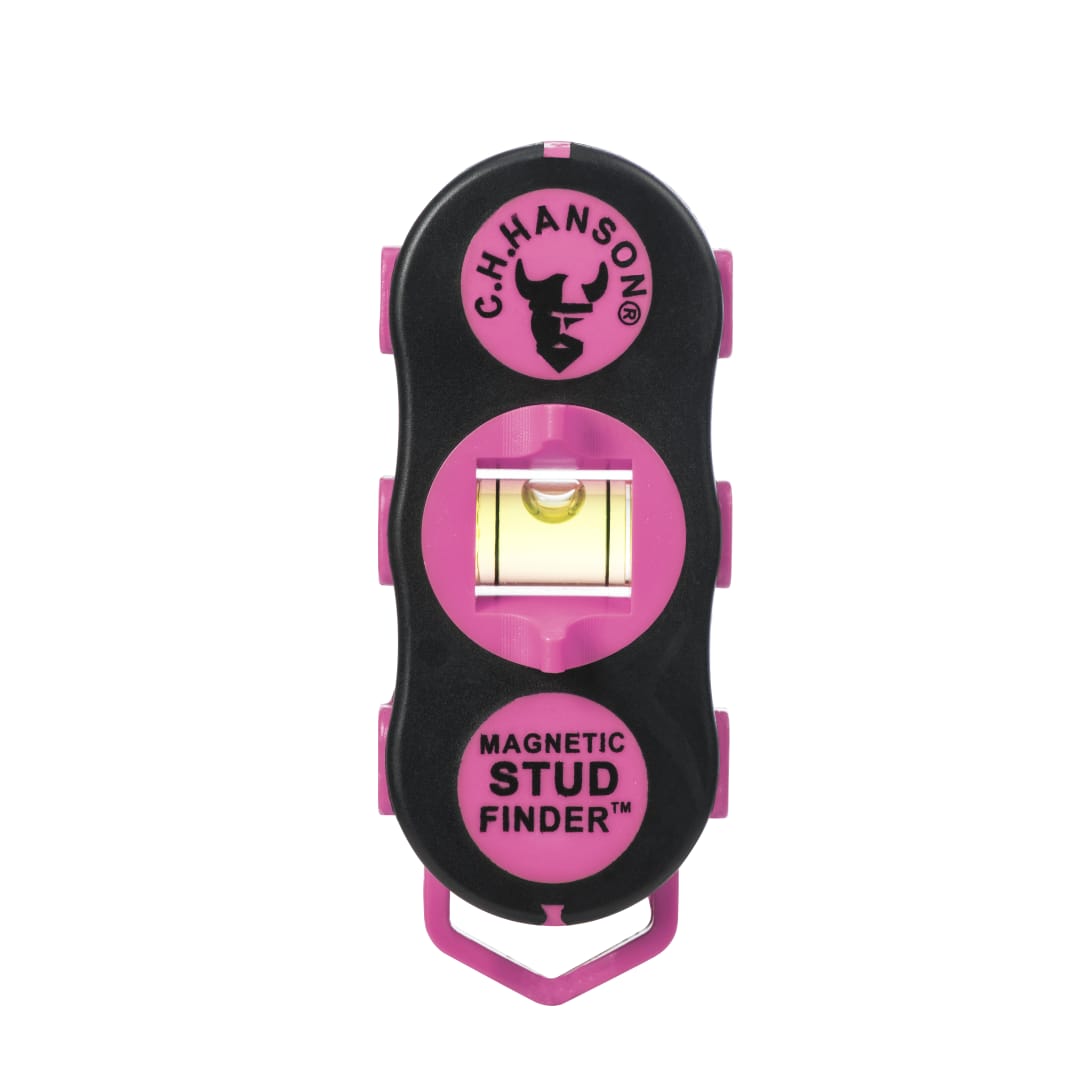
The catalogue also lists model 3046, a pink finish with its own UPC. C.H. Hanson's product and digital-assets copy describes the same battery-free rare-earth-magnet method and rotating-level function. The image below shows that exact pink-and-black colorway; the functional evidence reviewed does not establish a different scan mode or numeric depth for the 3046. We treat it as a finish-only variant covered by this 3040 assessment, rather than counting it as an additional matcher candidate. Its digital-assets description says a portion of sales supports breast-cancer research but does not specify an amount.
Assessment
The 3040 is a plausible low-complexity choice when a battery-free physical magnet cue, a likely drywall-fastener location and an integrated line-level aid cover the task. Its limited published evidence is also its central constraint: the maker's page gives no depth number, no electronic edge or center display, and no live-wire warning function. Confirm the exact model and finish on an offer, distinguish a fastening point from a verified stud center, and do not treat the rotating vial as a detection signal.
Key specifications
Key details at a glance
| Depth qualification | No numeric stud-detection depth is stated in the exact U.S. product page or official digital-assets record reviewed; no depth threshold is inferred. |
|---|---|
| Documented scan modes | ['Manual magnetic fastener-point location'] |
| Center and edge indication | No |
| Built-in bubble level | Yes |
| Battery requirement | None required |
Use the exact model’s instructions for operating limits, supplied equipment and version differences.
Sources for this review
Sources for this assessment
Check this model against your wall
Use the finder to compare documented surface limits, center/edge indications and other requirements. A match is not a safety certification.